
How gamification at work improves learning, engagement and performance
Read Time 5 mins | Written by: Wouter Krijger
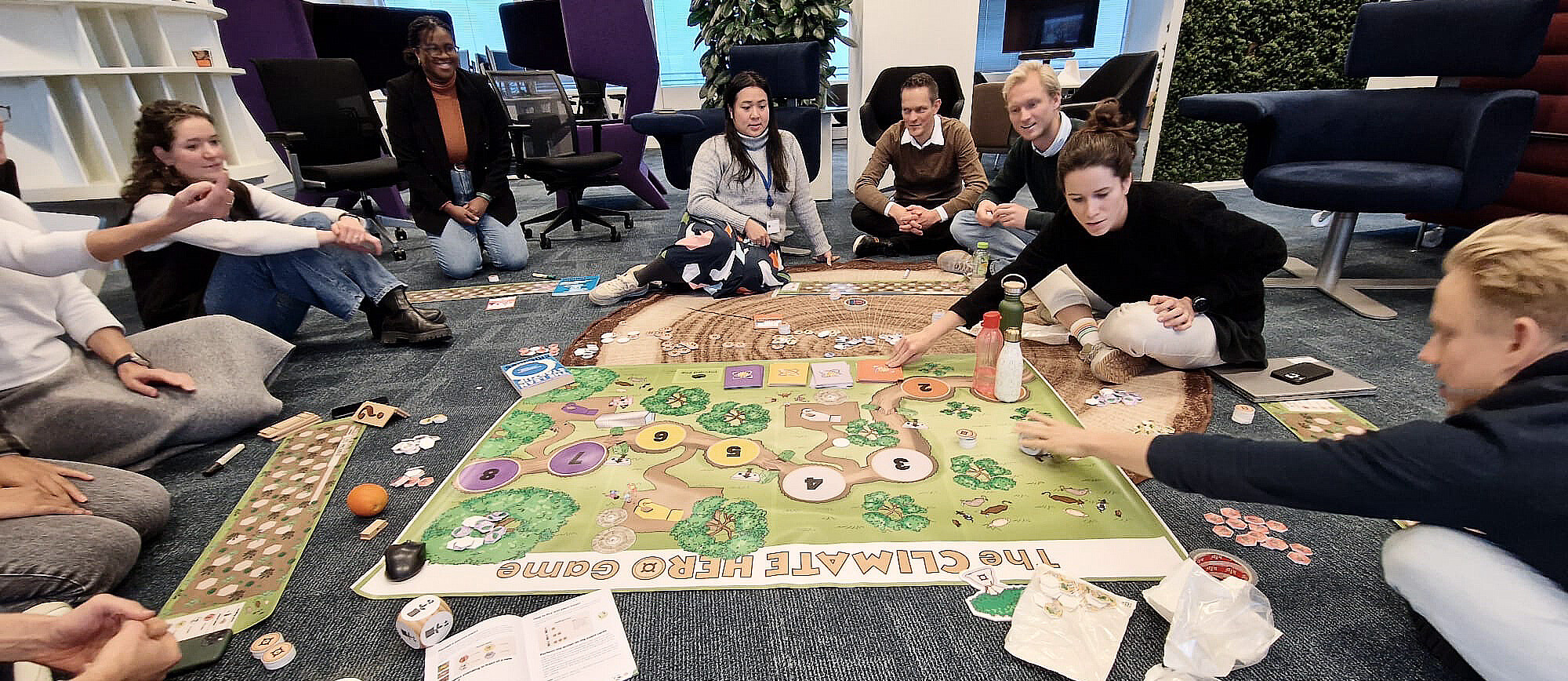
Most people associate gamification at work with points, badges, or leaderboards. But effective gamification goes much deeper than adding rewards to routine tasks.
At its best, gamification changes how people experience work. It turns passive processes into active ones. It gives people clearer goals, faster feedback, and a stronger sense of progress.
That's why more organizations are using gamification across learning and development, onboarding, performance management, and change initiatives. Not because they want work to feel like a video game, but because traditional approaches often struggle to keep people engaged.
What is gamification?
Gamification is the use of game mechanics in non-game environments to encourage participation, motivation, and behavior change.
In the workplace, that could mean:
- Turning training into interactive challenges
- Using progress systems to support development
- Creating team-based goals and missions
- Rewarding participation and improvement
- Providing real-time feedback during learning or performance tasks
The key difference is intent. Good gamification is designed around human motivation, not entertainment alone. It gives people a sense of achievement, autonomy, progress, and recognition. Those are the same drivers that make games engaging in the first place.
Why gamification at work actually works
Many workplace processes still rely on passive participation. Employees sit through training sessions, complete mandatory modules, fill in forms, or wait for annual feedback conversations.
The problem is that people rarely stay motivated when they don't see progress or feel involved. Gamification changes that dynamic by making participation more visible and interactive. Instead of completing tasks because they have to, people become more invested in improving, progressing, and contributing.
That's one reason gamification has become so effective in learning and development environments.
The main elements of gamification
Not every gamified experience looks the same, but most use a combination of these mechanics:
Points and progress tracking
Points give people immediate feedback. They create visibility around improvement and help employees understand where they stand. Used well, progress tracking builds momentum rather than pressure.
Badges and recognition
Recognition matters, especially when it reflects effort and growth rather than only final results. Badges can highlight milestones, skill development, certifications, or participation in learning activities.
Challenges and missions
Breaking larger goals into smaller challenges makes tasks feel more achievable. This is especially useful in workplace learning, where long training programs can otherwise feel overwhelming or repetitive.
Leaderboards
Leaderboards can encourage healthy competition, although they work best when used carefully. If competition becomes the only motivator, engagement often drops for people who fall behind. Strong gamification systems balance competition with collaboration and personal progress.
How gamification improves workplace learning
One of the biggest applications of gamification is employee training and development. Traditional training often struggles with retention because employees consume information passively. They watch, read, or listen without actively applying what they learn.
Gamification creates a more active learning experience. Instead of memorizing theory, employees interact with scenarios, solve problems, make decisions, and receive immediate feedback. That process improves both engagement and knowledge retention.
Onboarding programs can use gamification to guide new employees through tasks step by step. Leadership training can simulate difficult conversations or decision-making scenarios. Compliance training can become more practical and less repetitive. The learning experience becomes something employees participate in rather than simply complete.
Gamification and employee engagement
Employee engagement is difficult to improve through communication alone. People feel engaged when they can see progress, understand their impact, and receive recognition for their efforts. Gamification supports this by making growth and contribution more visible.
Even small mechanics, like completing challenges, unlocking milestones, or contributing to team goals, can increase participation and motivation when they're tied to meaningful work.
The important part is relevance. Gamification only works when employees understand why the activity matters. Adding rewards to poorly designed processes won't fix disengagement on its own.
Using gamification in performance management
Traditional performance reviews are often too infrequent to drive meaningful improvement. Employees receive feedback long after situations have happened, which makes it harder to adjust behavior or track progress consistently.
Gamification introduces shorter feedback loops. Employees can see progress in real time, understand which skills need development, and work toward clear goals incrementally. This creates a more continuous approach to performance management instead of relying entirely on annual review cycles.
We've seen companies use gamification to encourage commercial behavior, improve collaboration, and increase participation in internal initiatives because employees receive ongoing visibility into their progress.
How gamification supports collaboration
Change initiatives often fail because employees feel disconnected from the process. Communication alone usually isn't enough to create buy-in.
Gamification can help by breaking larger transformations into smaller, achievable steps. Employees can track progress, complete milestones, and participate more actively in the transition. That sense of progress reduces uncertainty and helps people feel more involved in the change itself. Instead of a change being imposed on them, employees experience it as something they contribute to.
Gamification and change management
Change initiatives often fail because employees feel disconnected from the process. Communication alone usually isn't enough to create buy-in.
Gamification can help by breaking larger transformations into smaller, achievable steps. Employees can track progress, complete milestones, and participate more actively in the transition. That sense of progress reduces uncertainty and helps people feel more involved in the change itself. Instead of a change being imposed on them, employees experience it as something they contribute to.
The role of technology in modern gamification
Modern gamification platforms are becoming far more advanced than simple reward systems. Many now integrate with AI, AR, and VR to create more personalized and immersive experiences.
Learning paths can adapt based on individual performance. Simulations can respond dynamically to employee decisions. Training environments can become more realistic and interactive. That flexibility allows organizations to tailor gamification experiences to different roles, learning styles, and business goals.
Is gamification right for every organization?
Not automatically. Poorly designed gamification can feel forced or superficial, especially when it focuses too heavily on rewards without improving the actual experience.
Successful gamification at work starts with understanding employee motivation and designing systems that support meaningful goals. The best examples don't distract from work. They improve how people experience learning, collaboration, and progress within it.
That's why gamification continues to grow across workplaces. When done well, it creates stronger engagement, better learning outcomes, and a more connected employee experience.
