
Most people have sat through a long training session, flipping through slides or watching a compliance video, waiting for it to be over. The content might be important, but the format makes it hard to stay engaged, let alone retain anything.
But what if training felt less like ticking a box and more like stepping into a gripping story? A place where you’re not just absorbing information but making decisions, solving problems, and shaping outcomes?
That’s the power of serious games.
At &ranj, we believe training should do more than just transfer knowledge. It should spark curiosity, challenge thinking, and feel like an experience. And the secret to making that happen? Storytelling!
What exactly is a serious game?
Serious games blend play with purpose. They're designed to educate, train, or solve real-world problems in a way that feels engaging and immersive. Players interact with scenarios, make choices, and learn from the outcomes in a safe environment.
Unlike traditional e-learning or classroom training, the experience is hands-on. You don't read about how to handle a situation. You handle it.
Whether the goal is onboarding, compliance, or leadership development, serious games make the learning feel relevant because it mirrors real decisions people face on the job.
Why stories work in training
We remember stories far better than lists of facts. Stories trigger emotions, and emotions improve retention. That's not a design gimmick; it's how humans have always transferred knowledge.
When training material is embedded in a narrative, abstract rules become concrete situations. Instead of reading a data privacy policy, you're placed in a scenario where you have to decide how to handle sensitive information, and you see what happens depending on what you choose.
The stakes feel real, even when they aren't. That's what makes the learning land.

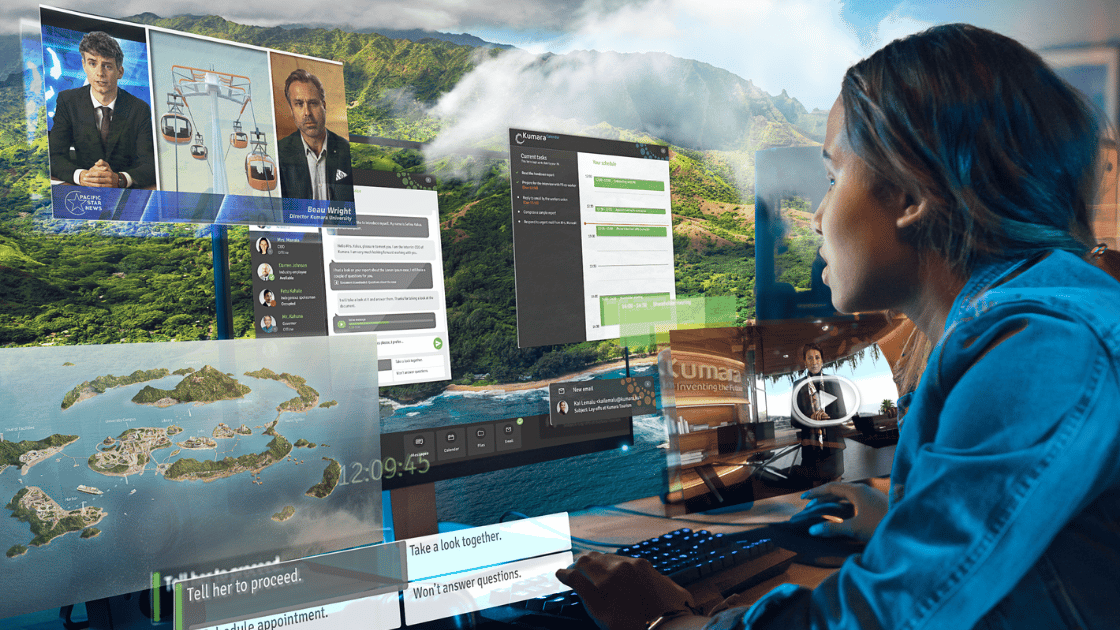
- An excerpt from READY-2 one of our interactive narrative simulations
How serious games compare to traditional training
Most traditional training follows a familiar pattern: sit through the content, sign off, move on. Research consistently shows that people forget the majority of what they learn within a few days if they don't apply it.
Serious games flip that script by focusing on:
- Active learning - You’re not just reading or listening. You’re making choices that impact the outcome.
- Real-world scenarios - Training is tied to practical, day-to-day situations that employees are likely to encounter.
- Instant feedback - When you make a mistake, you see the results immediately and you learn from them.
It’s learning that feels personal, relevant, and, most importantly, it sticks.
Bringing compliance training to life
Compliance training has a reputation for being the least engaging category of L&D. That's partly because it's usually delivered as rules to memorize rather than situations to navigate.
But what if compliance training felt like solving a mystery or navigating a high-stakes situation?
In a serious game, employees don’t just read the rules: they apply them. Picture this:
- You’re managing a safety inspection, and a potential hazard is flagged. What do you do?
- A colleague approaches you with sensitive client data. How do you handle it?
By walking through these scenarios in a game, employees get to practice applying rules in real time. If they slip up, they see the consequences – without any real-world fallout. It’s a risk-free way to reinforce the importance of compliance while making it feel relevant and engaging.
Why failing (in a game) is a good thing
Nobody likes to fail at work, but failure is one of the most effective learning mechanisms available. Serious games create a space where failure is safe and instructive.
Employees can try different approaches, see how decisions play out, and build genuine confidence before they face similar situations in the real world.
This is especially valuable in high-stakes areas like emergency response or sensitive HR scenarios.
Tailored to fit your world
At &ranj, we design custom games that reflect the reality of your organization. The scenarios are drawn from the actual challenges your people face, and the culture and values of the organization are woven in throughout.
The goal isn't to gamify content for its own sake, but to build a learning experience that feels familiar enough to be taken seriously and engaging enough to be remembered.
Real-world impact: a case study
One of our favorite projects was the Healthcare Compliance Experience, a serious game we developed for a large pharmaceutical company in the Benelux.
Compliance is critical in the pharmaceutical industry, but traditional training methods weren’t cutting it. Employees found the content boring, and retention rates were low.
We turned that around by embedding compliance rules into a dynamic, decision-based game. Players navigated ethical dilemmas, managed safety risks, and saw the direct consequences of their choices.
The results
- Higher engagement during training sessions.
- Improved retention of compliance knowledge.
- Employees who felt more confident and aware of how regulations applied to their daily roles.
The game didn’t simply teach the rules, it reinforced values like integrity and accountability, key traits for any industry dealing with sensitive or high-stakes work.
Ready to make learning unforgettable?
If you're looking to move beyond box-ticking training, we'd like to show you what's possible. At &ranj, we design learning experiences that challenge thinking, drive behavior change, and leave people better equipped for the situations they'll actually face.
