
“It is incredibly valuable to give children practical tools in a playful way and make difficult topics easier to discuss in the classroom.”
The project at a glance
A wellbeing programme designed to travel beyond the classroom
What if every child, just before the jump to secondary school, carried a small toolkit for moments of stress, uncertainty, conflict, or overwhelm?
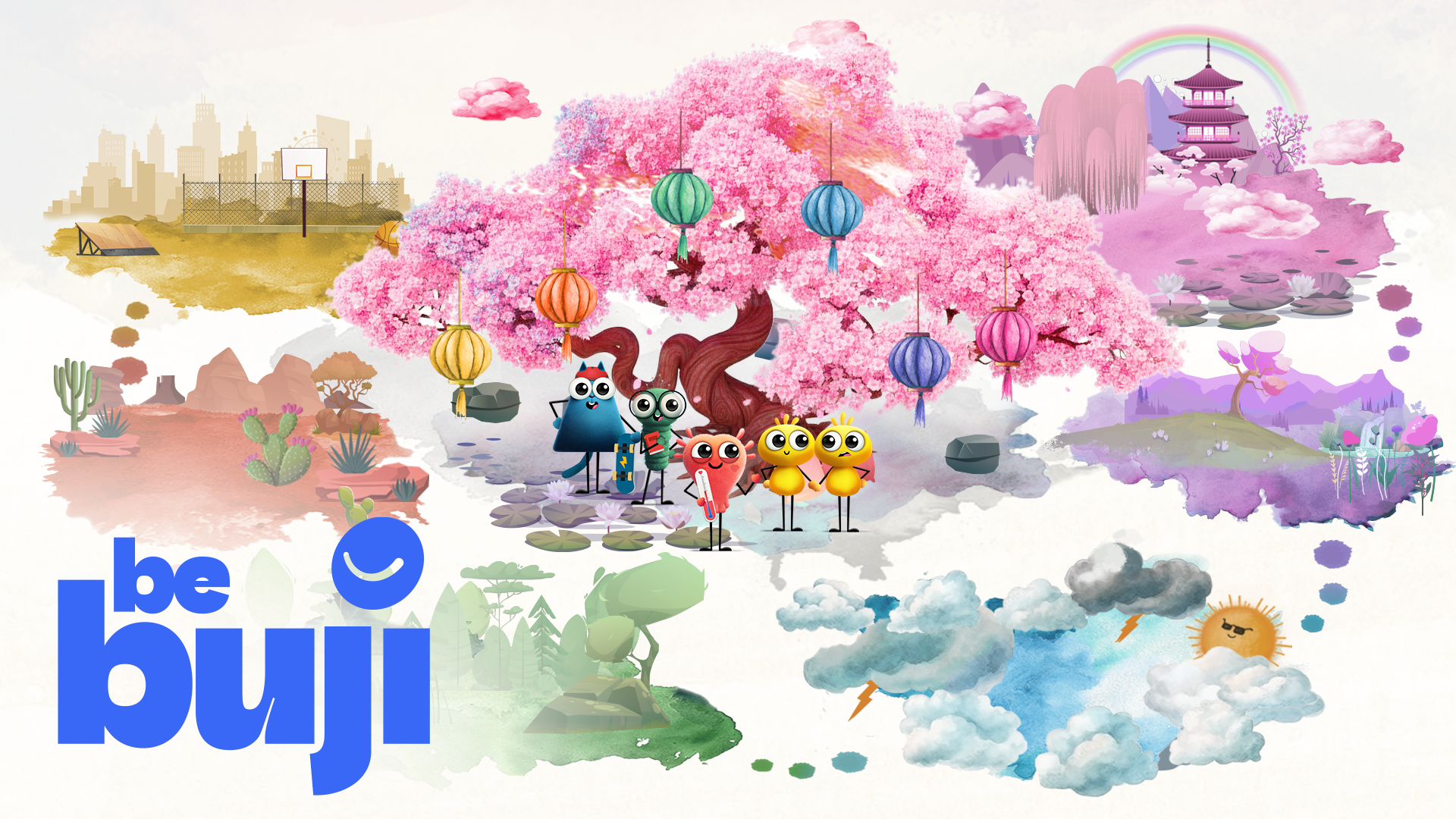
That question sat at the heart of BeBuji, a browser-based wellbeing programme developed by THUIS Orthopedagogen together with &ranj.
THUIS, an Amsterdam orthopedagogy practice founded by Pamela Burwinkel and Elize Mijnssen, had seen the same thing repeatedly in one-on-one sessions: relatively small techniques around breathing, self-awareness, trust, and emotional regulation could make a real difference for children. The challenge was how to bring those techniques into classrooms in a way that felt approachable, scalable, and genuinely useful outside the lesson itself.
Together, we developed a six-week programme combining online lessons, classroom exercises, and short daily routines inside a game-based world where four Buji characters help children practice emotional, social, physical, and mental wellbeing techniques.
What mattered most was not whether children completed the programme. It was whether they would still reach for those techniques later, in moments that actually mattered.
Want to turn a real-world behavioural challenge into a game your people will actually play?
The challenge
Helping wellbeing techniques stick outside the classroom
THUIS saw a gap that schools were struggling to fill.
The techniques themselves already existed. THUIS had been using them successfully in practice for years. But there was no scalable way to bring those techniques into classrooms without depending entirely on external specialists or overburdened teachers.
Schools were often left choosing between temporary external support, adding wellbeing responsibilities to already overloaded teachers, or relying on short-term initiatives that rarely lasted beyond the moment itself.
The ambition behind BeBuji was intentionally broader. The programme needed to:
- fit naturally into the school week
- work without a specialist in the room
- remain accessible for different schools and backgrounds
- connect emotional, social, physical, and mental wellbeing
- and most importantly, support transfer into daily life
THUIS wanted something children would continue using after the screen was gone.
Teaming up
Building BeBuji together
THUIS reached out to &ranj through a recommendation, initially drawn by the studio’s experience in serious games and behavior-oriented learning. From there, the collaboration quickly became deeply co-creative.
THUIS brought the orthopedagogy, developmental psychology, and practical experience of working with children aged 10 to 12. &ranj translated those insights into interaction design, storytelling, pacing, and a world children would actually want to return to.
Neither side could have built BeBuji alone.
Four rounds of classroom testing shaped the programme into what it eventually became. One of the biggest lessons appeared early: concepts that worked perfectly well in a therapy room often felt too abstract for children in a classroom setting.
That insight influenced nearly every layer of the experience, from the language and pacing to the visual communication and even the length of individual scenes.Animation also became an important part of the process. Because the animations were produced in-house by &ranj, the team could continuously refine scenes based on classroom feedback:
- “this part feels too long”
- “we didn’t understand what she meant”
- “this situation feels familiar”
That iterative rhythm became part of the project itself.
The solution
Learning through recognizable situations
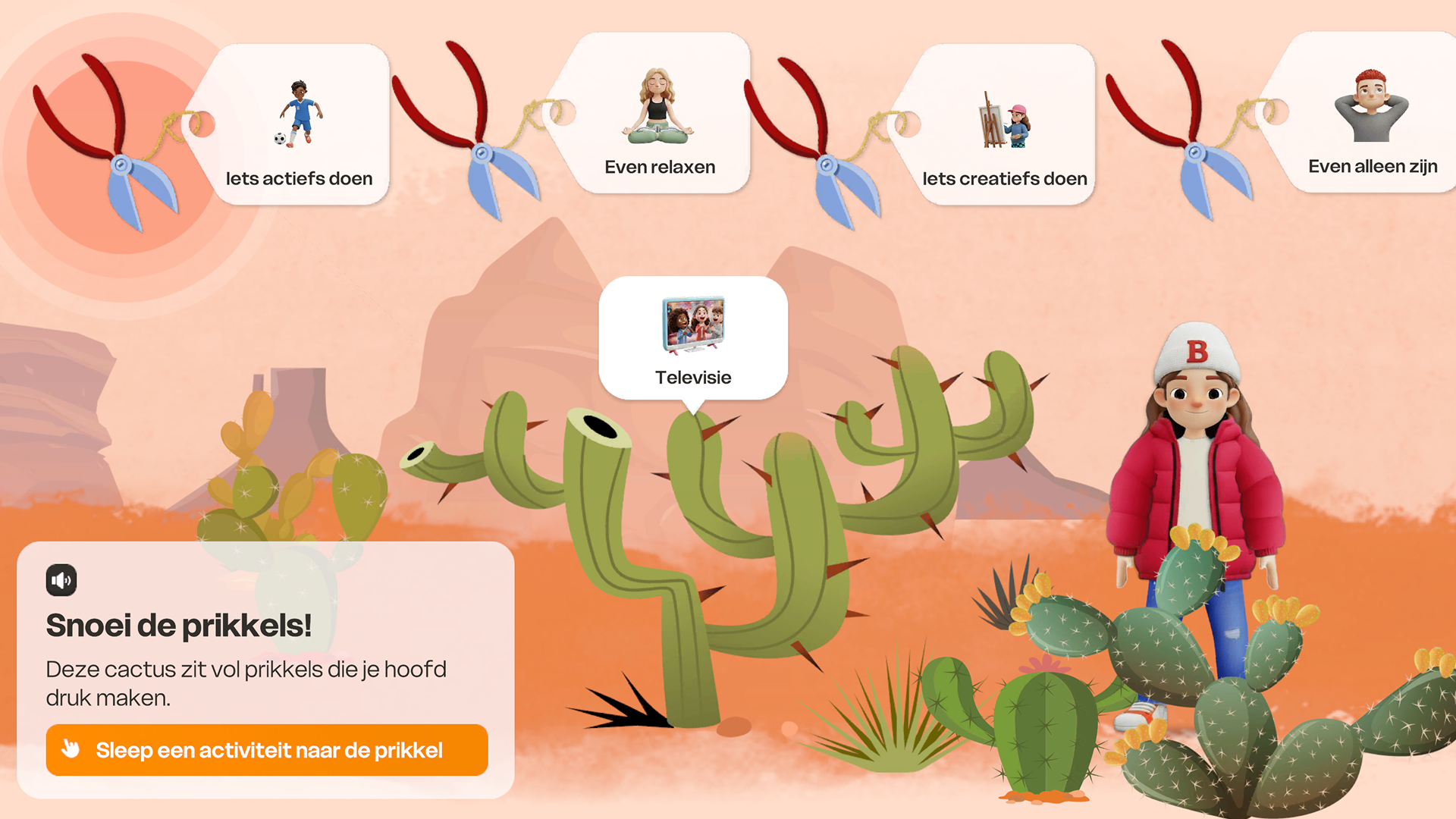
BeBuji is a browser-based wellbeing programme designed for children in the final years of primary school.
Each child logs in with their own avatar and explores a world centered around a growing tree. As they complete lessons and exercises, the tree develops alongside them, turning wellbeing into something visible.
The programme is built around four wellbeing pillars:
- emotional
- social
- physical
- mental
Each connected to its own Buji character and story world. Over 6 weeks, children move through individual online lessons, classroom exercises, and short daily routines integrated into the school week.
Teachers receive access to a growing wellbeing profile based on short mood check-ins and reflections woven into the experience. The profile gives teachers a more accessible way to start conversations with children without requiring them to become specialists themselves.
- School teacher
The impact
Early signals from the classroom
The strongest signals appeared surprisingly early.
Within the first week, 6 students in the pilot class reported already using the techniques outside the classroom, including after arguments, before sleeping, after sports, and during moments of stress or frustration.
One moment stayed with the team in particular.
During the school holidays, a student approached observer Aimée Clavaux in the hallway to explain that he had continued playing the upcoming lessons at home because he had been feeling “a lot of tension and anger” and wanted to calm down using BeBuji.
That moment captured something important: the techniques had started to travel beyond the classroom itself.
The social exercises created similar moments of recognition. During the classroom activity “Over de streep,” students gradually began sharing more personal experiences with each other. Several expressed relief in discovering they were not the only ones feeling certain pressures or insecurities.
12 students asked to repeat the exercise the same week. The teacher left the tape line on the classroom floor afterwards so the class could continue using it.
The pilot also revealed something important for teachers themselves. Sometimes the exercises surfaced emotions or situations that might otherwise have remained invisible. The wellbeing profile helped create gentle openings for conversation and support.
The next steps
Where we are now
BeBuji is now live with its first early-adopter schools.
The observations gathered during those early classroom pilots continue shaping the next iterations of the programme, from new save-game functionality to ongoing refinements in language, pacing, and accessibility.
THUIS and &ranj continue developing the platform together, using feedback from classrooms as an active part of the design process rather than something collected after the fact.
Because wellbeing programmes are never really finished. They need to keep listening to the children and teachers using them.

Services we provided:
- Concept and learning strategy
- AI conversation architecture and prompt design
- Game design and development
- Visual design (AI-assisted art direction)
- Behaviour change framework and validation
- Scientific content development with domain experts
Want to build something that has to work outside the moment you control?
Other case studies


Case study
Leveling up leadership: how Just Eat Takeaway upskilled thousands through play
Full Case Study