Most compliance modules have a completion problem and a recall problem. People finish them to finish them, and days later remember nothing. Game-based design shifts both.
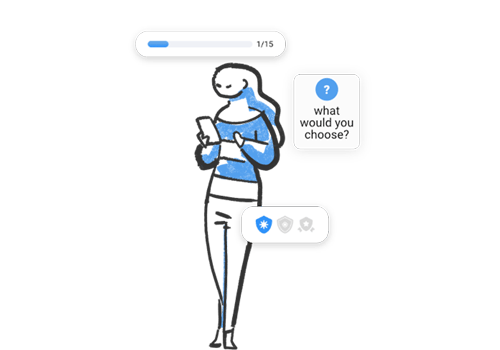
Interactive compliance learning
Compliance training people actually remember
Most compliance failures do not start as major incidents. They start with small signals, unclear situations, or everyday decisions that feel slightly off.
&ranj builds scenario-based training on proven formats, configured to your policies and risk areas, live in six weeks.
What changes when training is built around real decisions
This is what shifts when compliance training is built around how people actually decide, not around what's easiest to produce.
People who can read a grey-area situation
Policies cover the clear cases. The grey ones are where mistakes happen. Our scenarios put learners in the moments where the right call is not obvious, so they practise that call before it shows up in real life.
Training people do not click through
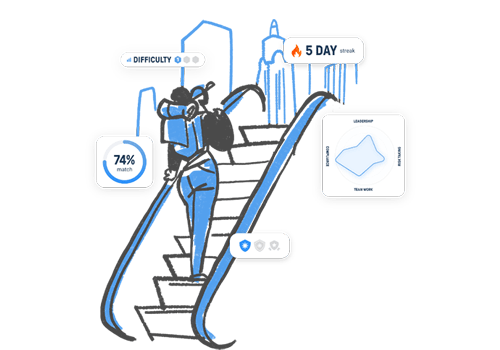
Completion is the start, not the proof
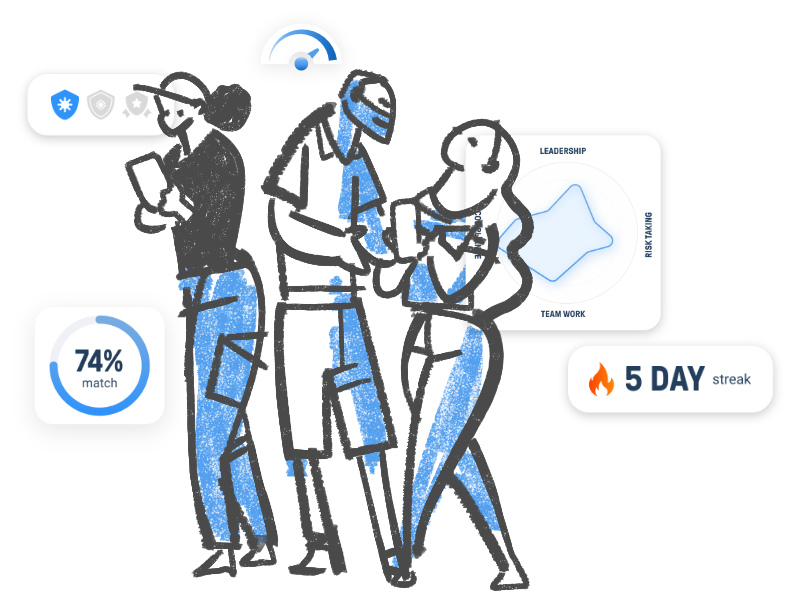
Completion rate shows the training happened. It doesn't show whether people would recognize the situation at their desk. Each scenario tracks these nuances to share with leadership, on top of completion.

Multinationals already running compliance learning with us
The challenge
Traditional compliance training rarely reflects
how decisions are made in real life
Static modules are easy to finish and easy to forget
Yearly modules, policy documents, and slide-based learning can transfer information effectively. But they often leave little room for practice, reflection, or behavioral context.
As a result, employees may understand the rules in theory while still struggling to recognize warning signs in daily work situations.
- Passive information transfer
- Limited behavioral practice
- Low long-term retention
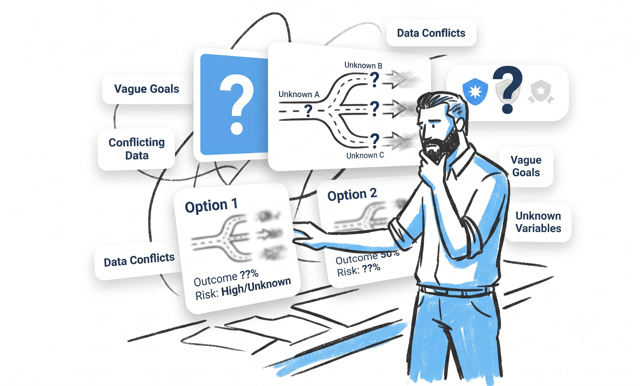
Real compliance challenges are rarely straightforward
Whether the topic is workplace conduct, anti-bribery, governance, or healthcare compliance, situations are often nuanced and emotionally complex.
People must interpret signals and respond under pressure, something traditional multiple-choice learning rarely recreates.
- Ambiguity creates hesitation
- Human behavior is contextual
- Judgment develops through experience
Our Solution
Compliance experiences that go past awareness
Employees step into situations they actually face and make choices that mirror real scenarios. Each program is configured to their role, region, and risk exposure before it goes live.
Step 1
Pick your format and risk topic
Experience Formats are built from structures we have already proven work: dilemma chains, day-in-the-life simulations, escalation scenarios. You start by choosing the format and risk area that fits your policy.
- Proven formats
You start from a structure already used in production, then choose the risk area it fits. - Matched to your goals
We map the format to what you're trying to change, not just the topic.
Step 2
Configure it to your policy and people
We load your policies, your scenarios, and your risk exposure into the format. Role and region settings determine which scenarios each learner sees.
Topics that suit this approach:
Healthcare compliance, anti-bribery, KYC, behavioral and cultural risk, personal conduct, governance, integrity, data privacy. If it involves judgment in grey areas, we have probably helped solve it before.
Step 3
Launch in 6 weeks
Because the format is proven, most programs go live in six weeks from kickoff. When a policy changes, you swap content, you do not rebuild a course.
- AI-enabled
- Evidence-based scenario design
- Adaptive learning
Step 4
Roll-out in your organization
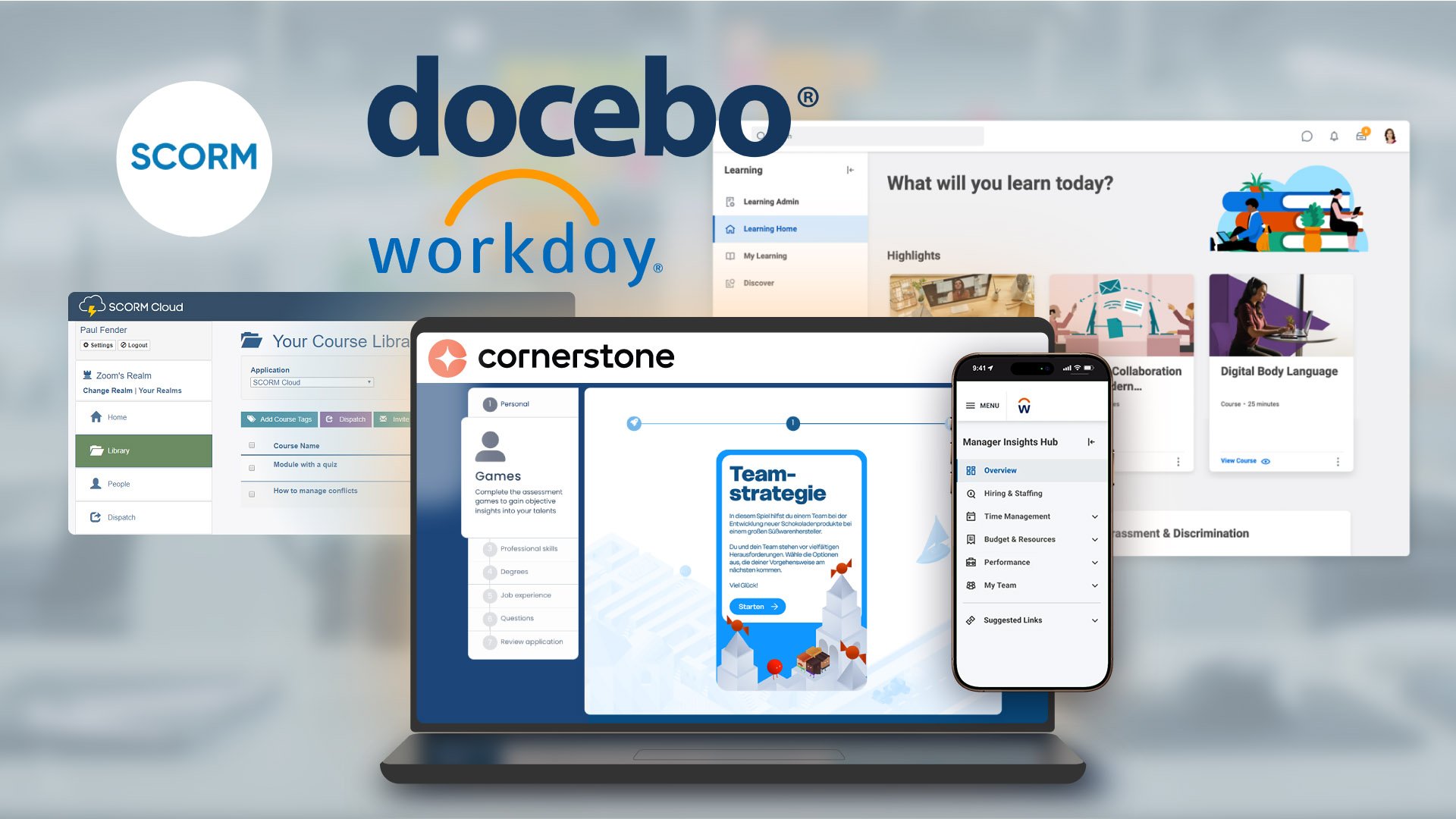
We handle the integration into your LMS, your workflows, your authentication. SCORM, xAPI, embedded in Teams, or all three.
For sensitive data we deploy fully inside your environment with nothing leaving your tenant. Local compliance officers stay close to the rollout because they own the relationship with the people taking it.
Step 5
Track and adjust
Once it is live, we track what people do inside the experience: which scenarios they get right, where they hesitate, which decisions they flip on a second attempt.
That data shows where content needs updating or where reinforcement is needed.
Does this work for me?
Yes, if any of these sound familiar
- You need compliance training live in weeks, not after a multi-month custom build.
- Your topics include ethics, conduct, anti-bribery, KYC, behavioral risk, HCC, or data protection.
- You want scenario-based learning using a proven format configured to your policy.
- You need evidence that training changed behavior, not just that people finished it.
Your vision, our expertise
Free compliance
learning prototype
25+ years of work with compliance teams in pharma, banking, consulting, and legal.
Tell us about your policy and risk area. We'll configure a working scenario from a proven format so you can see it before you commit to anything.
What we will cover:
-
A working scenario built from your actual policy
-
The format matched to your risk area and audience
-
A clear view of what configuration and rollout would involve
*Free prototypes are available to organizations that meet our project criteria.
Frequently Asked Questions
Why is gamified compliance training more effective than the e-learning we already have?
E-learning transfers information. That is what it is good at. Most compliance situations require judgment, not information recall. Game-based design lets people practise the decisions, see consequences, and build the reflexes that show up when no one is checking.
How do you measure impact beyond completion rates?
Four levels: did people enjoy it, did they learn it, did their behavior change, did the business move. We measure in-game decision quality on grey-area scenarios, recall weeks after launch, speak-up and reporting rates, and reduction in the incident categories your compliance team is tracking. We design measurement in from week one.
Can the training be tailored to our policies and to local jurisdictions?
Yes. We build the core engine once and load it with your code of conduct, your scenarios, and your local policy variants. Markets that need different rules get different content. The core stays consistent globally.
How long until we can launch?
A focused single-topic module takes 1 to 2 months. A multi-topic program with localisation takes 3 to 4 months. If you want to test the approach first, we can run a six-week proof of concept and decide from there.
Do you do global rollouts?
That is most of what we do. 20+ languages routinely, programs running across every major region.
Which compliance topics suit game-based learning best?
Anything with grey areas and judgment under pressure. HCC, anti-bribery, personal conduct, KYC, AML, behavioral and cultural risk, data privacy, governance, internal investigations. Topics that are purely procedural do not gain much from games. Anything that requires reading a situation does.
How do your learning solutions integrate with existing systems (LMS, HR tools)?
We integrate our solutions seamlessly with major Learning Management Systems (LMS) and HR platforms, ensuring easy adoption without disrupting existing workflows.
What happens after launch?
Maintenance packages cover policy updates, technical updates, branding refreshes, minor functional enhancements. Several of our compliance clients have been on annual maintenance cycles with us for more than ten years.
What does it cost?
Pricing varies based on program scope, level of customization, and fidelity of the solution. We offer scalable solutions to fit different budgets while maximizing ROI.